Webinar Recap: Road to Teal Forum 2026 Highlights Indonesia’s Path Toward a Just and Future-Ready Economy
Ira Yulianti Purnomo — “We’ve learned today that sustainability is not just about having the right policies or the right technology. It’s about connecting data with decisions, finance with communities, and ambition with real action. When these elements move together, transformation becomes possible. No sector can walk this transition alone, only through collaboration can we ensure that economic growth also delivers dignity, resilience, and opportunity for all”.
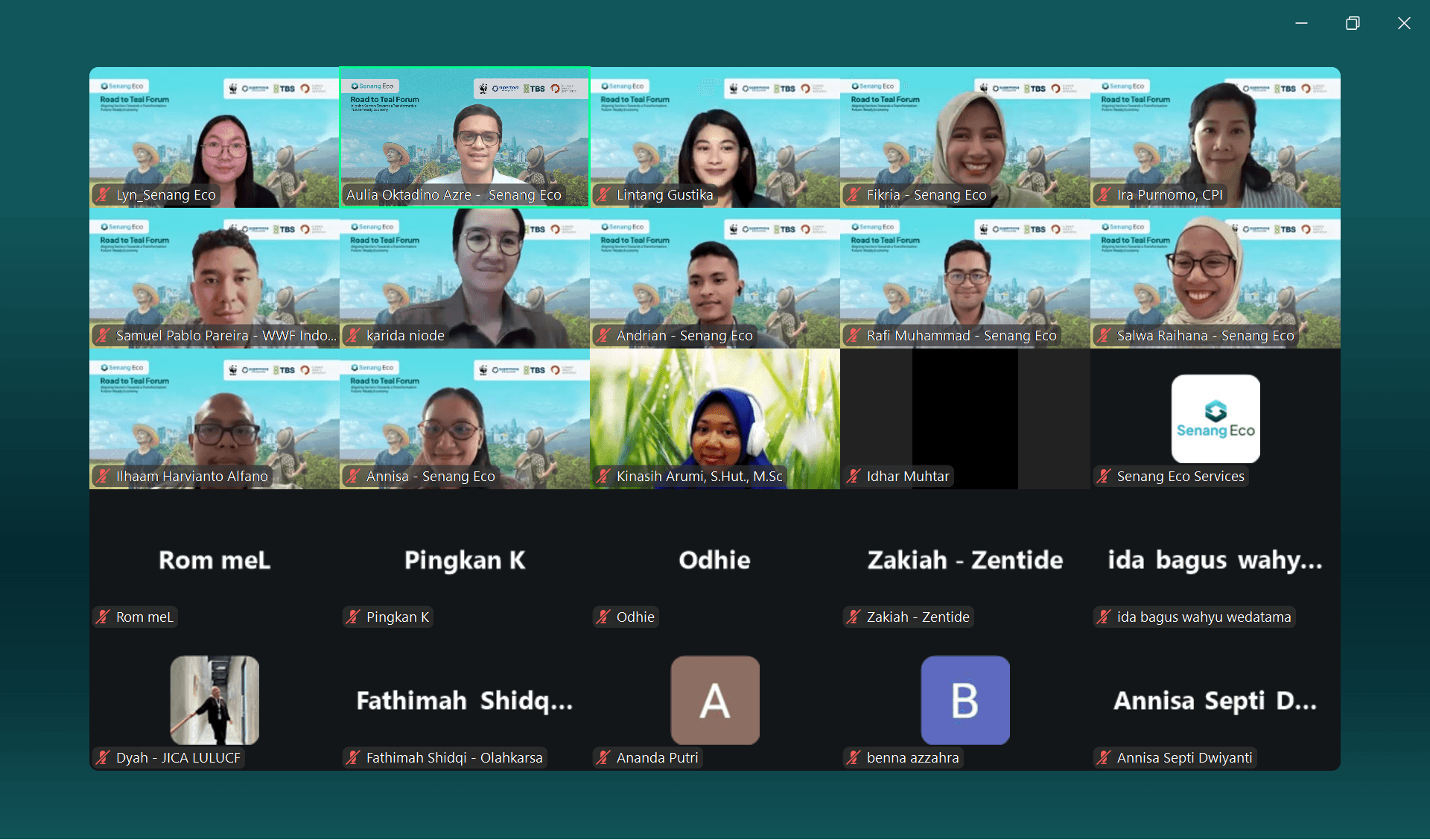
Bali, 12 February 2026 - The Road to Teal Forum 2026: Aligning Sectors Towards a Transformative Future-Ready Economy was successfully held via Zoom. Organized by Senang Eco, the webinar highlighted the importance of how sustainable agriculture, tourism, climate finance, and just transition can support Indonesia’s long-term economic transformation. The session brought together policymakers, private sector leaders, development organizations, and 42 attendees.
Moderated by Ira Yulianti Purnomo, Senior Analyst from the Climate Policy Initiative (CPI), the session explored practical pathways for building sustainability data systems, strengthening access to finance, improving supply-chain traceability, and accelerating the adoption of low-carbon emission technologies. The discussion highlighted how these elements must work together to ensure that sustainability commitments translate into measurable and inclusive impact.
Building on this foundation, Rafi Muhammad, Lead Sustainability Consultant at Senang Eco, underscored the growing importance of sustainability matrices and double materiality assessments, particularly for Small and Medium Enterprises (SMEs) and agricultural producers. He emphasized that access to funding alone is not sufficient without strong institutional and technical support.
“Many small producers receive financing, but lack access to legal frameworks, institutional support, and technical knowledge. This is where ecosystems matter,” Rafi explained.
Extending this perspective to the agricultural sector, Samuel Pablo Pareira, Business Engagement and Development Specialist at WWF Indonesia, highlighted the structural vulnerabilities faced by smallholder farmers, especially in coffee and cocoa value chains. He noted that long-term resilience depends on secure land tenure, credible certification systems, and continuous mentoring supported by NGOs, buyers, and financial institutions working collaboratively.
Complementing these insights, Lintang Gustika, Deputy Ecosystem and Programme at Supernova Ecosystem, shared Supernova’s experience in supporting indigenous and community-based enterprises through soft loans, technical assistance, and capacity building. She emphasized that sustainability transitions must prioritize social inclusion.
“A just transition must ensure that local communities are not only protected, but empowered to grow,” Lintang noted.
From the corporate perspective, Karida H. Niode, VP Sustainability at TBS Energi Utama Tbk, reflected on the company’s transformation from high-emission industries toward renewable energy, electric vehicles, and waste management. She highlighted that becoming finance-ready and sustainable is a continuous learning process rather than a one-time achievement.
“You have to start before you feel fully ready. Learning by doing is part of the journey,” Karida said.
Throughout the discussion, participants actively exchanged perspectives on aligning sustainability policies, financing mechanisms, and market incentives, highlighting challenges such as regulatory complexity, limited access to inclusive financing, and capacity gaps among small producers, as well as opportunities through blended finance, public–private partnerships, and improved supply-chain traceability. The dialogue was framed by the opening address of Andrian Dwi Kurniawan, Founder and CEO of Senang Eco, who emphasized that sustainability should be “joyful and actionable,” and the Economic Transformation Outlook 2026 presented by Salwa Raihana, Business Development and Project Manager of Senang Eco, which highlighted the need to bridge ambition and implementation, particularly in renewable energy, waste management, and climate financing.